
Building a Mental Health and Suicide Prevention Framework
Most people want to help when someone around them is struggling. The difficulty is knowing what to notice, what to say, and when to involve professional support.
A colleague may become withdrawn after months of appearing overwhelmed. A friend might talk about feeling hopeless or becoming a burden. A team member may make a concerning comment that is easy to dismiss as frustration.
In these moments, goodwill is not always enough.
People may avoid the conversation because they are afraid of saying the wrong thing. Others may respond too quickly, offer simplistic advice, or take on responsibilities that belong to qualified professionals. When suicide may be part of the concern, uncertainty can become even more intense.
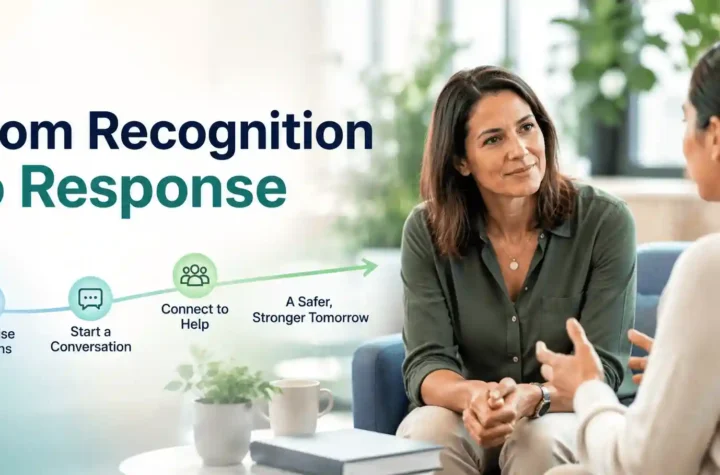
A practical mental health and suicide prevention framework helps replace uncertainty with a safer and more consistent response. It gives people the confidence to recognise concerns, approach someone respectfully, listen without judgement, and connect them with appropriate help.
The purpose is not to turn employees, friends, educators, or community members into clinicians. It is to prepare ordinary people to take the next helpful step.
Awareness Is Only the Beginning
Mental health awareness campaigns have helped make conversations about wellbeing more visible. They can reduce stigma, introduce support services, and remind people that mental health deserves attention.
However, awareness does not automatically create capability.
A person may understand that depression is common but still feel unsure about approaching a colleague who appears distressed. A manager may support suicide prevention in principle but have no clear process for responding to a concerning disclosure. An organisation may promote help-seeking without ensuring that staff know where to direct someone who needs urgent support.
An effective framework must answer practical questions:
- What changes should people pay attention to?
- How should a conversation begin?
- What should someone do if suicide is mentioned?
- Who is responsible for organising further support?
- What happens after the initial conversation?
- How are the person providing support and the person receiving it both protected?
Training is most useful when it sits within a system that answers these questions clearly.
Mental Health Concerns Are Not Always Obvious
Some people openly explain that they are struggling. Many do not.
Changes may appear gradually through behaviour, communication, work performance, relationships, or daily routines. A person may become quieter, unusually irritable, frequently absent, less organised, or disconnected from activities they previously valued.
They may describe feeling trapped, hopeless, worthless, or like a burden to others. These statements can be warning signs that require careful attention, particularly when they appear alongside significant changes in behaviour or functioning.
No individual sign confirms that someone has a particular mental health condition or is thinking about suicide. People respond to distress differently, and concerning changes can have many possible explanations.
The goal is not to diagnose the person based on a checklist.
The goal is to recognise that something may be wrong and create an opportunity for a safe conversation.
A simple observation can be enough:
“I have noticed that you have seemed under a lot of pressure recently, and you have been quieter than usual. How are things going?”
This approach is grounded in what has been observed. It avoids assumptions and gives the person room to respond in their own way.
Build Broad Mental Health Response Skills First
A strong framework begins with general mental health literacy and early intervention skills.
People need to understand that mental health problems can affect thinking, behaviour, relationships, communication, and daily functioning. They also need a clear process for approaching someone, listening, assessing immediate concerns, and encouraging appropriate professional support.
Standard Mental Health First Aid training is designed to help adults provide initial support to another adult who may be experiencing a mental health problem or mental health crisis.
The training covers recognition of signs and symptoms, risk factors, barriers to seeking help, supportive communication, early intervention, and crisis response. Participants learn a structured action plan that can be applied until professional help is received or the immediate crisis is resolved.
This broader foundation matters because not every mental health conversation involves suicide.
Someone may be experiencing anxiety, depression, substance-related problems, panic, trauma, disordered eating, or another form of distress. People providing initial support need enough knowledge to respond appropriately without assuming that every situation is the same.
General mental health first aid training can also help participants understand the limits of their role.
A trained person is not expected to diagnose, provide therapy, or solve the underlying problem. Their role is to recognise possible concerns, offer initial support, and help the individual connect with suitable professional or personal assistance.
Add Specific Suicide Alertness Skills
General mental health training and suicide prevention training overlap, but they are not identical.
A person can understand common mental health problems and still feel unprepared to ask someone whether they are thinking about suicide. Fear, stigma, and uncertainty often make people avoid direct language precisely when clarity is most important.
safeTALK suicide prevention training focuses specifically on suicide alertness.
The half-day LivingWorks program is designed to help participants notice possible invitations for help, talk openly about suicide, listen to the person’s response, and connect them with further support. The training uses the TALK model, which stands for Tell, Ask, Listen, and KeepSafe.
The role of a safeTALK participant is often described as a Suicide Safety Connector. This language is important because it sets an appropriate boundary.
The participant is not being trained to provide clinical treatment or independently manage an ongoing suicide crisis. They are being prepared to recognise that suicide may be present, begin a direct and compassionate conversation, and connect the person with someone who can provide further help.
Asking Directly About Suicide Is Safer Than Avoiding the Subject
One of the most persistent concerns about suicide prevention is the belief that asking about suicide could place the idea in someone’s mind.
This belief can prevent people from asking a necessary question.
Australian health guidance states that asking someone directly whether they are thinking about suicide does not place them at greater risk. A direct question can show that the concern is being taken seriously and give the person permission to speak honestly.
The question should be calm, clear, and free from judgement.
For example:
“Sometimes when people feel trapped or hopeless, they think about suicide. Are you thinking about suicide?”
Vague questions can produce vague answers. Asking whether someone is “doing something silly” or “thinking dark thoughts” may make it harder for the person to understand what is being asked.
Direct language communicates that the topic can be discussed.
The person asking should also be prepared to listen. The purpose is not simply to complete a question and move on. It is to create space for an honest answer and respond appropriately to what is shared.
Listen Without Rushing to Fix the Situation
When someone discloses significant distress or thoughts of suicide, the natural response may be to reassure them immediately.
People may say:
- “You have so much to live for.”
- “Things will look better tomorrow.”
- “Try to focus on the positive.”
- “You would never actually do that.”
- “Think about how your family would feel.”
These responses may come from care, but they can minimise the person’s experience or make them feel guilty for speaking honestly.
A more helpful response begins with listening.
The person providing support can acknowledge the seriousness of what has been shared and express genuine concern:
“Thank you for telling me. I am glad you did. I want to help you connect with the right support.”
Listening does not mean agreeing with hopeless beliefs. It means allowing the person to explain what they are experiencing without being interrupted, debated, or judged.
It is also important to avoid making promises that cannot be kept.
If someone may be in danger, their safety takes priority over a promise of complete secrecy. The supporter can be transparent about this:
“I will respect your privacy as much as I can, but I may need to involve someone who can help keep you safe.”
This approach is more honest than promising confidentiality and later breaking that promise.
Understand the Difference Between Support and Treatment
A practical framework must define where initial support ends and professional responsibility begins.
Mental health first aiders and suicide-alert helpers can play a valuable role, but they should not become the only source of support.
Their role may include:
- noticing concerning changes
- starting a private conversation
- listening without judgement
- asking directly about suicide when concerned
- taking disclosures seriously
- connecting the person with further help
- following established emergency or organisational procedures
- checking in again when appropriate
Their role does not include:
- diagnosing a mental health condition
- providing psychotherapy
- independently deciding that a person is safe
- taking sole responsibility for ongoing crisis support
- keeping serious safety concerns secret
- acting beyond their competence or authority
Clear boundaries protect everyone involved.
Without them, a well-intentioned helper may become overwhelmed, delay professional involvement, or feel personally responsible for another person’s recovery.
Standard MHFA and safeTALK Serve Different Purposes
Standard Mental Health First Aid and safeTALK should not be treated as interchangeable courses.
Standard MHFA provides a broad foundation for recognising and responding to a range of mental health problems and crises. It develops general mental health literacy, supportive communication skills, and confidence in guiding someone towards appropriate help.
safeTALK has a narrower and more specific focus. It prepares participants to notice when suicide may be present, ask directly, listen, and connect the person with further suicide support. LivingWorks describes it as a half-day, face-to-face suicide alertness workshop for people aged 15 and over.
One program builds broad capability across many mental health situations. The other strengthens a specific link in the suicide prevention pathway.
Together, they can create a more complete response.
A person with general MHFA knowledge may be better prepared to recognise patterns of distress and hold a supportive mental health conversation. A person with safeTALK training may be more confident in recognising possible suicide invitations, naming the concern directly, and making a timely connection to additional help.
Map the Support Pathway Before Training People
Training should not be the first and only step.
Before asking employees or community members to initiate difficult conversations, an organisation should decide what happens after a concern is raised.
The support pathway should identify:
- internal contacts who can respond
- available health and counselling services
- emergency escalation procedures
- responsibilities for managers and supervisors
- privacy and documentation requirements
- procedures outside standard operating hours
- options for people who do not feel comfortable using internal support
- follow-up responsibilities after a referral
The pathway must be realistic.
A policy that tells people to contact a single staff member is not useful if that person is unavailable, lacks appropriate training, or is directly involved in the situation.
Organisations should also consider whether different groups need different pathways. Employees, students, volunteers, clients, and members of the public may require different referral and safeguarding processes.
People are more likely to use their training confidently when they know exactly where the next connection leads.
Use a Layered Training Model
Not every person in an organisation needs the same level of training.
A layered model allows capability to be developed according to role, responsibility, exposure, and organisational risk.
General Awareness
All staff can benefit from a basic understanding of mental health, respectful language, available resources, and the importance of early help-seeking.
Mental Health First Aid
A broader group can be trained to recognise common mental health concerns and provide appropriate initial support.
These participants may include managers, human resources staff, safety representatives, wellbeing champions, union representatives, educators, community leaders, and employees who regularly support others.
Suicide Alertness
Targeted suicide prevention education can prepare more people to notice possible invitations for help and connect someone with further assistance.
safeTALK can be incorporated into workplaces, schools, homes, and community settings, with the program designed for participants aged 15 and older.
Specialist Intervention and Clinical Support
More complex assessment, safety planning, treatment, and ongoing care should remain with appropriately qualified practitioners and crisis services.
The layers should connect with one another rather than operate as separate initiatives.
Prepare Managers for Their Additional Responsibilities
Managers often occupy a difficult position.
They may be the first person to notice a change, but they also have responsibilities relating to performance, workload, safety, privacy, and team operations.
A manager needs to know how to hold a compassionate conversation without turning it into an informal clinical assessment.
They also need to understand that the workplace itself may be contributing to the person’s distress.
A referral to counselling should not replace action on excessive workload, bullying, role conflict, discrimination, unsafe conditions, or poorly managed organisational change.
The manager should consider two questions at the same time:
- What personal or professional support might this person need?
- What workplace factors can reasonably be addressed?
This creates a more complete response.
Mental health support should not be used to shift responsibility entirely onto the individual when organisational conditions are part of the problem.
Create a Culture Where Concerns Can Be Raised Early
A framework is only effective when people feel able to use it.
Employees may stay silent if they believe that disclosing a mental health concern will damage their career, affect their reputation, or lead colleagues to treat them differently.
They may also hesitate to raise concerns about another person if previous reports have been ignored or handled poorly.
Trust is built through consistent behaviour.
Leaders can strengthen that trust by:
- responding calmly when concerns are raised
- treating mental health information with appropriate privacy
- avoiding stigmatising language
- taking action on workplace risks
- making support options visible
- allowing time to access professional help
- following through after difficult conversations
- acknowledging the emotional impact on people who provide support
Culture is shaped less by what an organisation says during an awareness campaign and more by what happens when someone actually needs help.
Support the People Who Provide Initial Help
Listening to someone in serious distress can have an emotional impact on the helper.
They may worry about whether they said the right thing, replay the conversation, or feel responsible for what happens next. Those with personal experience of suicide, grief, trauma, or mental health challenges may be affected more strongly.
A responsible framework includes support for these participants.
After a difficult interaction, a helper may need:
- a confidential debrief with an appropriate person
- reassurance about the actions they took
- clarity about what happens next
- time away from immediate duties
- access to professional support
- guidance about maintaining appropriate boundaries
A debrief should protect the privacy of the person who disclosed the concern. It should focus on the helper’s wellbeing, the actions taken, and any improvements required in the support process.
Organisations should never celebrate trained staff as heroes who must always be available. They are people with their own limits and support needs.
Avoid Common Implementation Mistakes
Several mistakes can weaken an otherwise well-intentioned initiative.
Training Without a Referral System
Participants may learn how to start a conversation but have nowhere clear to direct the person afterwards.
Making One Person Responsible for Everyone
A single wellbeing champion cannot safely carry the mental health needs of an entire organisation.
Treating Training as a Compliance Exercise
Attendance numbers do not show whether participants feel confident or whether organisational systems work in practice.
Expecting Helpers to Diagnose Risk
Initial responders should follow their training and escalation procedures rather than making unsupported clinical judgements.
Ignoring the Helper’s Wellbeing
People who respond to difficult disclosures may need support themselves.
Failing to Review the Framework
Contact details change, services become unavailable, staff leave, and organisational needs evolve. Support pathways must be reviewed regularly.
Measure Capability, Not Just Course Completion
The number of people trained is useful information, but it is not the final measure of success.
Organisations should also consider whether:
- participants feel more confident starting conversations
- people know how to access support
- managers understand their responsibilities
- referrals are handled consistently
- concerns are raised earlier
- privacy is protected
- trained helpers receive appropriate follow-up
- employees or community members trust the available system
Feedback should be collected from both participants and people responsible for managing referrals.
Scenario exercises can also reveal gaps. An organisation can test what would happen if a concern were raised after hours, during remote work, at a public event, or when the usual contact person is unavailable.
The aim is not to create a perfect response to every possible situation. It is to make the pathway clear enough that people do not become paralysed when action is needed.
A Safer Response Starts With a Clear Next Step
Mental health and suicide prevention frameworks do not depend on ordinary people having all the answers.
They depend on people recognising when something may be wrong and knowing the next safe step.
Standard Mental Health First Aid can build broad confidence in recognising and responding to mental health problems. safeTALK can strengthen the specific ability to notice possible suicide invitations, ask directly, listen, and connect someone with further help.
These skills are most effective when supported by clear referral pathways, appropriate professional services, responsible leadership, and ongoing care for the people providing support.
The goal is not to create a workforce or community of amateur clinicians.
It is to create more people who are willing and prepared to notice, ask, listen, and connect.
Sometimes that first conversation is the bridge between private distress and meaningful support.


More Stories
How to Select a Lightweight and Durable Transport Wheelchair
What Health Conditions Can Pregnancy Scans Show
A Detailed Guide to Oral Health